What is QUAL2K? — A Comprehensive Guide to River Water Quality Modeling
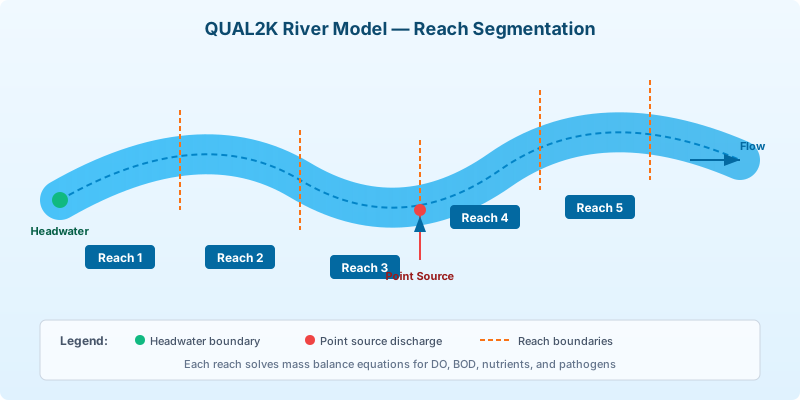
QUAL2K (Q2K) is a modernized version of the QUAL2E model, developed by the U.S. Environmental Protection Agency (EPA) for simulating the water quality of rivers and streams. It is one of the most widely used tools in environmental engineering for assessing the impact of point and non-point source pollution.
Simulate dissolved oxygen with Streeter-Phelps
Model the DO sag curve in your river using the classic Streeter-Phelps calculator
Open Streeter-Phelps CalculatorWhy Use QUAL2K?
Rivers are the lifelines of ecosystems and human communities. When pollutants — from wastewater treatment plants, agricultural runoff, or industrial effluent — enter a river, the water quality degrades. QUAL2K helps engineers and regulators:
- Predict how pollutant concentrations change downstream
- Evaluate the effectiveness of treatment plant upgrades
- Design Total Maximum Daily Loads (TMDLs) for regulatory compliance
- Understand the dissolved oxygen dynamics crucial for aquatic life
Key Features
QUAL2K models a river as a series of computational elements called "reaches." For each reach, it solves the mass balance equations for multiple water quality constituents:
- Dissolved Oxygen (DO)
- Biochemical Oxygen Demand (BOD) — fast and slow fractions
- Nitrogen cycle (Organic N, Ammonia, Nitrate, Nitrite)
- Phosphorus cycle (Organic P, Inorganic P)
- Phytoplankton, Bottom Algae, Pathogens, and more
How It Works
The model divides the river into user-defined reaches and solves a steady-state mass balance for each constituent. Inputs include:
- Headwater conditions: The upstream boundary (flow, temperature, chemistry)
- Point sources: Wastewater discharges at specific locations
- Diffuse sources: Non-point source runoff distributed along the river
- Meteorological data: Air temperature, wind, cloud cover for heat balance
- Kinetic rates: Reaction rates for oxidation, nitrification, etc.
The output is a longitudinal profile showing how each constituent varies along the river.
The QUAL2K Web Wizard
Our online wizard makes QUAL2K accessible without Excel spreadsheets. Define your river system step by step, fill in the required data, and run the simulation directly in your browser. Results are visualized instantly as charts and exportable as CSV/JSON.
Related Resources
Ready to model your own river?
Put what you just read into practice with the full QUAL2K prediction engine
Try the free QUAL2K wizard